Contents
The need to manage demandSmaller generators and new business possibilitiesFrom grid connection to system participationWind and solar expand the coordination taskFrom installed capacity to available capabilityTurning a portfolio commitment into device actionsTaking responsibility in grids and marketsDifferent markets shape different operating modelsA sustainable way to organize distributed resources
The need to manage demand
Electricity systems have always had to match supply with demand over time. Cooking, cooling, and other daily activities determine when electricity is needed; the supply side must provide for those patterns. A sharp but brief peak can require extra capacity that is used for only a small part of the year. Many of the actions now coordinated by VPPs grew out of this earlier problem.
U.S. utilities were running direct load control and interruptible service programs in the early 1970s. Customers accepted limits on some consumption under agreed conditions in return for compensation or favorable tariffs. An LBNL historical review identifies rising air-conditioning demand as one driver. By the late 1970s and the 1980s, load management was becoming part of utility resource planning.[2]
These programs established an economic principle: meeting peak demand involves comparing the cost of adding supply with the cost of adjusting consumption. Moving deferrable demand out of a constrained period can reduce the supply capacity needed at that time.[2][9]
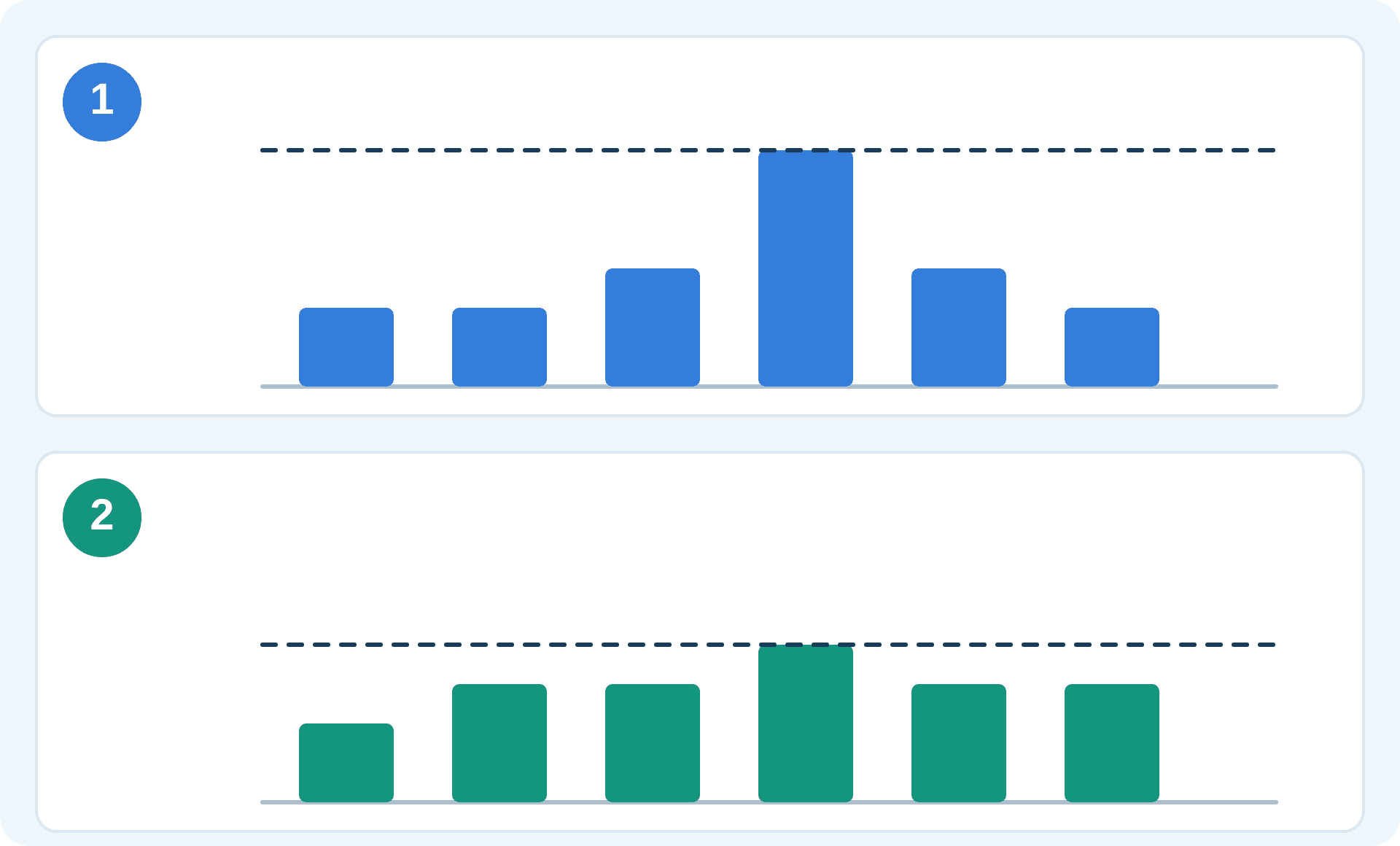
Illustrative values on the same power scale; not measured project data.
Early programs largely involved utilities organizing customers to manage peaks. As the types and owners of distributed resources changed, and electricity markets opened new routes to participation, coordinating those resources became a broader operating task.
Smaller generators and new business possibilities
In the 1990s, small modular generation and information technology began changing ideas about how electricity supply could be organized. In his 1997 article “Metering for the Virtual Utility,” Shimon Awerbuch discussed a virtual utility: as the minimum economic scale of generation declined, companies could use metering, information, and contracts to combine distributed generation, energy efficiency, and purchased electricity. The concept was broader than a VPP, but already shifted attention toward organizing supply capabilities.[3]
This idea also had an institutional context. In 1996, the U.S. Federal Energy Regulatory Commission (FERC) issued Order No. 888, requiring relevant transmission utilities under its jurisdiction to provide open, nondiscriminatory transmission service. Its purpose was to reduce barriers to competition in wholesale electricity markets.[4] Market opening created more room for transactions across companies, and for aggregation and service operation to develop as businesses.
Smaller equipment allowed more parties to own generation; market access gave them opportunities to sell into a larger supply system. Yet a small generator could be connected to the grid and still lack the scale to handle forecasting, bidding, dispatch, and settlement on its own. The organizing question became practical: how could separately owned and operated resources participate as a manageable portfolio?
From grid connection to system participation
The European FENIX project, which ran from October 2005 to September 2009, set out to aggregate distributed resources into large virtual power plants. Its planned scope covered both small domestic combined heat and power units and larger resources such as wind farms and industrial cogeneration, connecting their aggregated capabilities to grid management and markets.[5]
These resources could already generate electricity. The remaining problem was how the system could use them. Papers by FENIX participants describe how a lack of visibility and controllability prevented distributed resources from being scheduled like conventional plants. Producing energy did not, by itself, make a resource dependable capacity at a specified time.[7][11]
Aggregation added a coordination layer: gathering resource states and constraints, forecasting available capability, and allocating an overall requirement among individual resources. The grid or trading counterparty could deal with the portfolio, while the portfolio coordinated the devices within it. A common operating interface gave the virtual power plant a practical organizational form.[5][7]
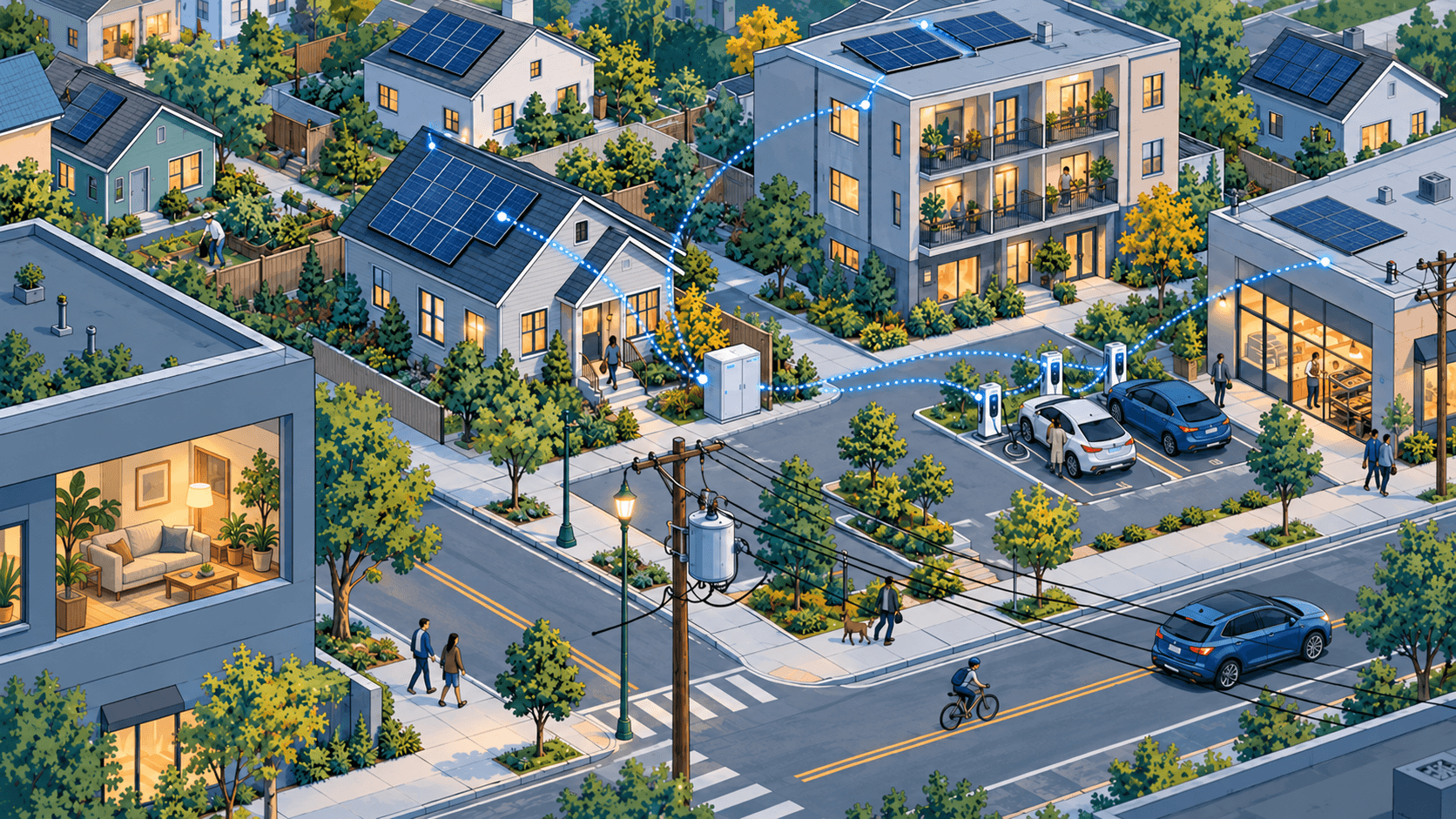
FENIX studied both commercial and technical aggregation. The former addressed how resources could be combined into tradable capability; the latter also accounted for their locations and local network conditions.[7] The project developed hierarchical communications and control alongside work on regulatory and contractual arrangements, with field demonstrations in Britain and Spain.[6]
Wind and solar expand the coordination task
Wind and solar added another source of variation. Demand had always fluctuated, but weather also changed the electricity available on the supply side. The IEA’s analysis of wind and solar integration therefore considers dispatchable generation, stronger grids, storage, and demand response together.[8]
For a VPP, more of the value of coordination can lie in timing. When solar output is abundant, suitable consumption can be moved into that period and storage can charge. When the system is constrained, deferrable demand can fall or storage can discharge. Generation, consumption, and stored energy can contribute together, enabling a wider range of services.[9]
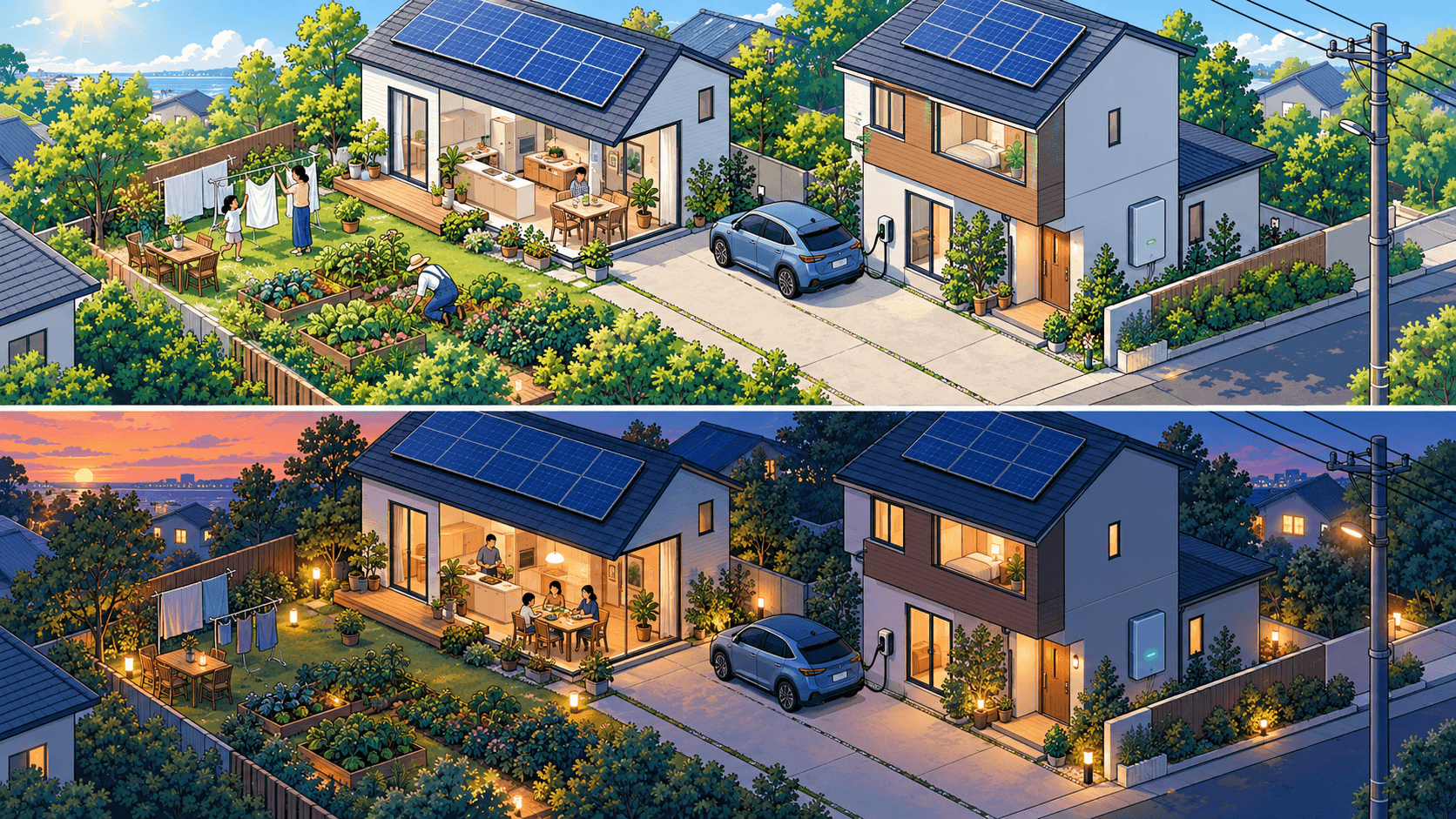
Electric vehicles, customer batteries, and smart building equipment further expanded the resource base. The U.S. Department of Energy’s 2023 VPP report places these resources alongside flexible commercial and industrial loads within a common aggregation framework.[9]
Early load management and distributed generation aggregation thus converge in today’s VPPs. With more types of resources available, the operator must answer a concrete question: how much capability can these devices actually provide together when it is needed?
From installed capacity to available capability
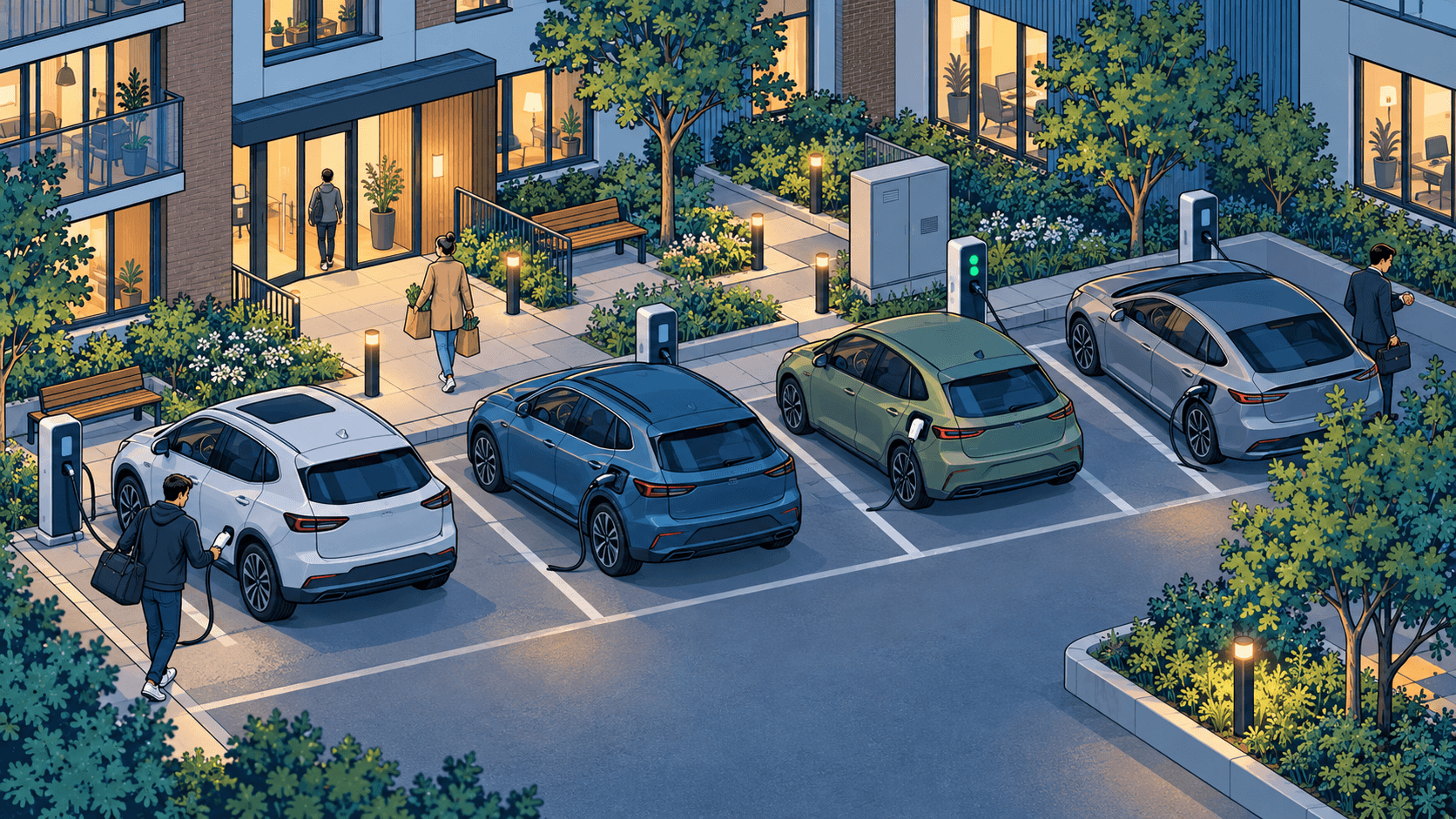
EV charging makes the distinction clear. Charging can be rescheduled while a vehicle is parked, provided it receives the energy needed before departure.[9]
Consider a hypothetical group of 1,000 vehicles that are already charging. If each can reduce its demand by 1 kilowatt for the same full hour and recover the deferred energy before departure, the group can reduce grid demand by 1 megawatt and defer 1 megawatt-hour of charging. This uses unidirectional charging control; the vehicles do not need to export electricity.
That capability depends on the vehicles being connected, drawing power, and able to defer charging. Vehicles that are unplugged, already full, or about to leave cannot simply be counted in. Enrollment and nameplate ratings must be combined with operating states, customer agreements, and future needs to establish capability for a particular period.[9]
Similarly, a battery’s discharge power and available energy constrain the size and duration of its response. Air conditioners and heat pumps face temperature and comfort constraints.[9]
A service commitment therefore needs a start time, a power adjustment, a duration, and a recovery plan. Operators must keep updating what they can deliver, rather than relying on an inventory of enrolled devices.
Turning a portfolio commitment into device actions
Once capability has been assessed, the portfolio’s commitment must become device actions. The operating system gathers states, forecasts capability, allocates tasks, and adjusts to execution results. China’s 2025 guidance lists monitoring, forecasting, and the decomposition and execution of instructions among the functions of a VPP operator’s technical support system.[1]
Resource states continue to change during delivery. The system must use feedback to reallocate tasks; if too little spare capability remains, total delivery can fall. This continuing adjustment turns the visibility and controllability emphasized in early research into operating requirements. Response speed and communications requirements depend on the service being provided.[1][9]
Actual results also need verification under the relevant service rules to support performance assessment and settlement.[1][10] Where the capability can be offered, and under what participation status, depends on network conditions and market rules.
Taking responsibility in grids and markets
Resources connect to particular distribution lines and nodes. More generation or less consumption at one location may have a different effect on a network constraint than the same change elsewhere. This was part of FENIX’s distinction between commercial and technical aggregation: a tradable portfolio must also respect local voltage and capacity limits.[7] FERC’s aggregation rules likewise require coordination among aggregators, regional grid operators, and distribution utilities to protect distribution system reliability.[10]
Market participation requirements matter too. Registering, metering, and trading small devices individually creates organizational costs. Aggregation can provide scale, but still needs rules that accommodate that form of participation.[10]
FERC issued Order No. 2222 in 2020, requiring regional markets under its jurisdiction to allow distributed energy resource aggregations to participate, while addressing size, location, metering, communications, and coordination. Implementation schedules and detailed requirements remain specific to each region.[10]
China’s 2025 guidance on accelerating VPP development brings system connection, capability assessment, and market access into one framework. A VPP meeting the relevant registration and entry requirements can participate as an independent market entity. Buying and selling electricity in medium- and long-term or spot markets requires electricity retail company qualifications. Resources participating in spot markets should, in principle, lie within the same market clearing node; aggregation across nodes is permitted where network conditions and market rules allow.[1]
Rules and contracts must also establish who submits commitments and executes them, how results are recognized, and how participants settle payments. These arrangements allow system operators and counterparties to plan around the service.[1][10]
Revenue must support connection, communications, operation, and verification, while compensating resource owners under their agreements. Technical flexibility becomes a durable business only when the financial arrangements also give customers a reason to keep participating.[9]
Different markets shape different operating models
Once participation is possible, revenue mechanisms further shape operating objectives: when to reserve capability, when to use it, and how to judge the outcome.
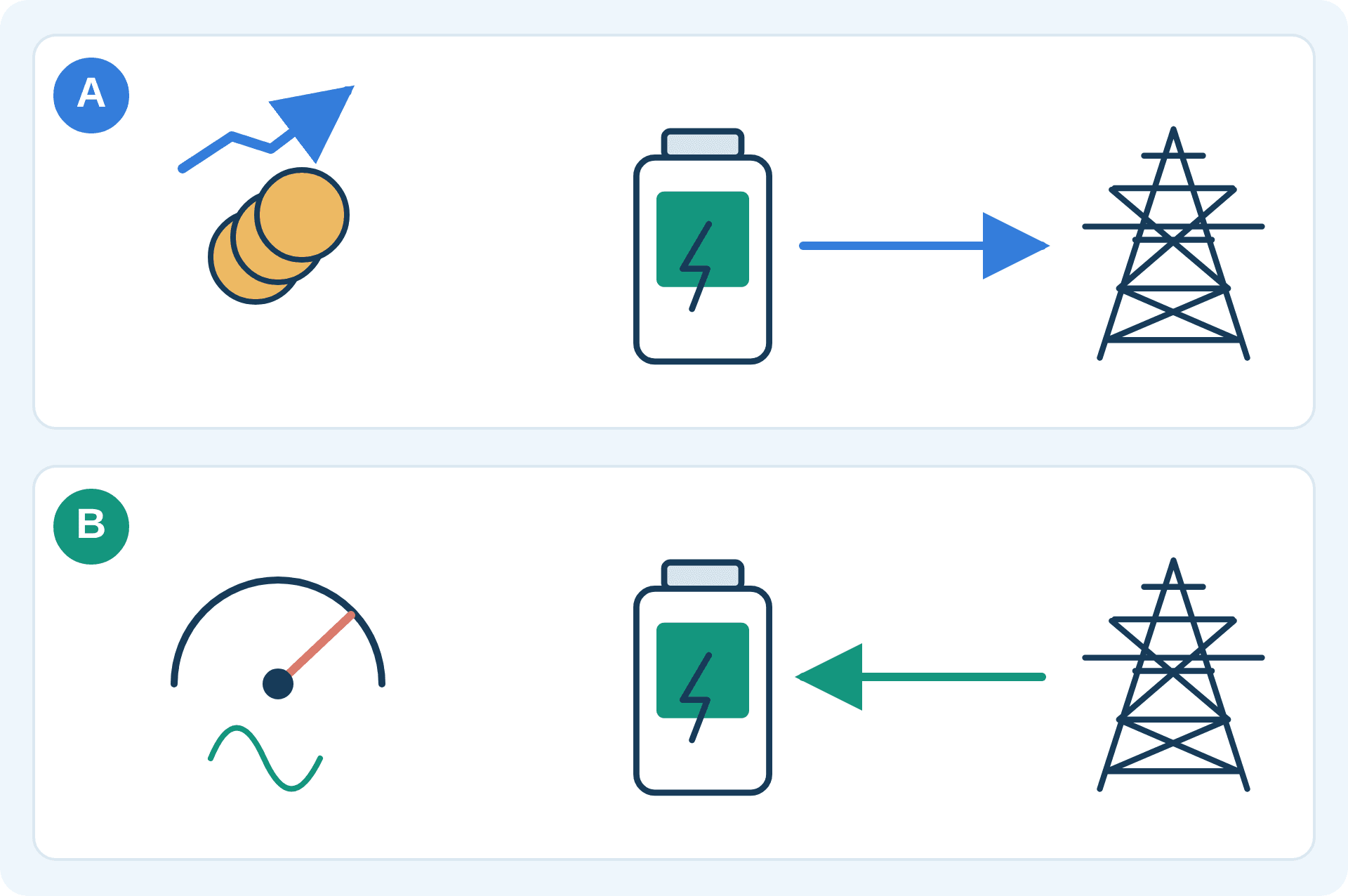
AEMO’s 2021 report on VPP demonstrations in Australia’s National Electricity Market (NEM) describes pathways including energy price response, contingency frequency control ancillary services (FCAS), and local network services.[13] Multiple revenue streams may be combined, but they draw on the same equipment capability.
The report records a conflict in which high spot prices encouraged battery discharge while a frequency service responding to high grid frequency required increased charging, resulting in underdelivery. Some participants subsequently changed their strategies to limit price response when frequency moved outside its normal range.[13]
Hunan’s 2026 local demand response pilot illustrates a different arrangement. To address heavily loaded substations or lines, the load management center invites VPPs to respond for specified periods and capacities at stated compensation rates, monitors delivery, and assesses and settles results afterward.[14] The operating priority is to deliver at the agreed location and time.
These services create different trade-offs. Price arbitrage requires judging prices and choosing when to use limited stored energy. A committed response requires capability to be held in reserve, with other trading opportunities coordinated around that obligation. Markets and contracts therefore enter the control objective and influence how resources are used.
These differences also exist within a country. China’s 2025 guidance covers demand response, spot markets, and ancillary services, while the Australian demonstrations involved multiple services.[1][13] A VPP’s operating model needs to be understood through its specific markets, customer contracts, and revenue arrangements, rather than country labels alone.
A sustainable way to organize distributed resources
Early load management established the system value of adjusting consumption. Smaller generators and market opening brought more independently owned resources; communications and control made coordination possible. Wind, solar, storage, and flexible electrical equipment expanded both the need and the opportunity. VPPs developed by combining these conditions in different regions and projects.
Together, these conditions give a VPP two sets of responsibilities. Within the portfolio, it must keep assessing capability, allocating tasks, and verifying results. Externally, it must deliver services with specified timing, duration, and location, and meet its commitments. Revenue mechanisms then shape how this organization and control operate.
Whether a region needs a VPP depends on whether distributed resources can economically provide the flexibility the system lacks, after accounting for coordination, connection, and delivery costs. Centralized generation, storage, network investment, and directly organized demand response remain alternatives to compare.[8][9] VPPs have a concrete source of value where distributed flexibility is available but existing operating and trading arrangements cannot readily organize it. How much they can reliably deliver must be established through actual operation and verified results.
References
- [1] National Development and Reform Commission; National Energy Administration · Guidance on Accelerating the Development of Virtual Power Plants (NDRC Energy [2025] No. 357) · Issued March 25, 2025; published April 11, 2025; sections I and V–XI. In Chinese
- [2] Peter Cappers, Charles Goldman, and David Kathan · Demand Response in U.S. Electricity Markets: Empirical Evidence · LBNL-2124E; June 2009; introduction, PDF pp. 7–8; early load control and market reform
- [3] Shimon Awerbuch · Metering for the Virtual Utility—An Agenda · September 1, 1997; contemporary article discussing the Virtual Utility
- [4] Federal Energy Regulatory Commission · Order No.888 · Issued April 24, 1996; official historical overview
- [5] European Commission / CORDIS · FENIX: Flexible electricity networks to integrate the expected energy evolution — Fact Sheet · Project 518272; October 1, 2005–September 30, 2009; objective
- [6] European Commission / CORDIS · FENIX — Periodic Report Summary · Updated October 3, 2012; hierarchical control, British and Spanish demonstrations, and regulatory and contractual research
- [7] Martin Braun; Fraunhofer/ISET · Virtual Power Plants in Real Applications: Pilot Demonstrations in Spain and England as part of the European project FENIX · October 2009; ETG conference paper, 6 pages; visibility, commercial and technical aggregation, and demonstrations
- [8] International Energy Agency · Integrating Solar and Wind — Executive summary · September 18, 2024; variability and integration measures
- [9] U.S. Department of Energy · Pathways to Commercial Liftoff: Virtual Power Plants · September 2023; mirror of the original report; pp. 6–7, 16–19, 56, and business model discussion
- [10] Federal Energy Regulatory Commission · FERC Order No.2222 Explainer: Facilitating Participation in Electricity Markets by Distributed Energy Resources · Explains the 2020 order and 2021 amendments; aggregation participation, size, location, metering, and coordination. Implementation timetables are not used here
- [11] D. Pudjianto, C. Ramsay, and G. Strbac · Virtual power plant and system integration of distributed energy resources · March 12, 2007; IET Renewable Power Generation 1(1), pp. 10–16; publisher abstract
- [12] gridX · Virtual Power Plant (VPP) · September 23, 2026; starting reference for this article
- [13] Australian Energy Market Operator (AEMO) · AEMO NEM Virtual Power Plant Demonstrations — Knowledge Sharing Report #4 · September 15, 2021; pp. 5–6 on multiple services and conflicting responses; p. 21 and footnote 68 on p. 44 on frequency response direction; evidence from a completed demonstration
- [14] Hunan Provincial Development and Reform Commission · Hunan Pilot Scheme for VPP Participation in Local Electricity Demand Response (Hunan Development and Reform Commission Energy [2026] No. 30) · Issued January 16, 2026; published January 23, 2026; section IV, activation, execution, and assessment. Applies to the provincial local pilot. In Chinese